
What is Human Factors?
Simply put, Human Factors is a scientific discipline that examines how individuals interact with the world around them. Human Factors has a number of synonyms, including ergonomics (a term largely associated with physical design in the United States), engineering psychology, and human engineering. Human Factors includes researchers and practitioners in a number of fields – heath care and medical devices, technology development, human performance, training, and transportation. Some of the most informative definitions of Human Factors follows.
Human Factors is “the scientific discipline concerned with the understanding of interactions among humans and other elements of a system, and the profession that applies theories, principles, data, and other methods to design in order to optimize human well-being and overall system performance.”
Human Factors is a field which “seeks to turn human-machine antagonism into human-machine synergy.”
Human Factors is discipline that “uses knowledge of human abilities and limitations to the design of systems, organizations, jobs, machines, tools, and consumer products for safe, efficient, and comfortable human use.”
Transportation Human Factors
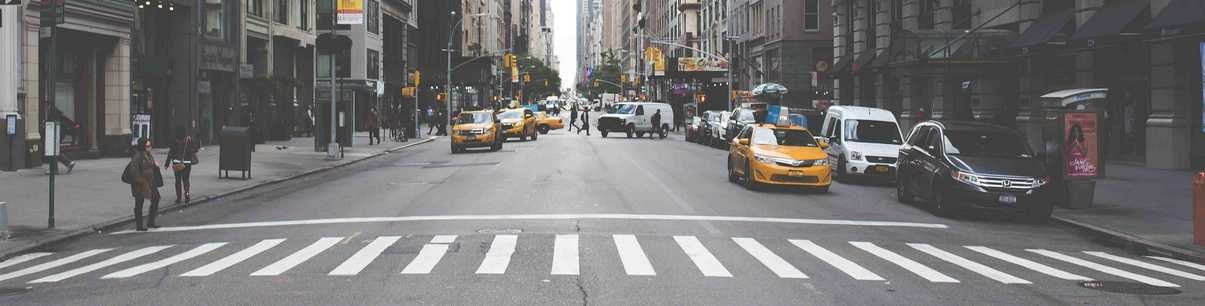
The subdomain of transportation Human Factors includes aviation, rail, maritime, and ground/surface transportation (driving). My background includes primarily surface transportation work – both in automobiles as well as commercial motor vehicles such as trucks and buses. In examining surface transportation safety and efficiency, we typically examine how three factors interact: the driver, the vehicle, and the environment. How these three factors interact can influence the safety and efficiency of the overall surface transportation system. Below are some of the most common areas of inquiry in the field of surface transportation Human Factors.
Road User factors can include fatigue, intoxication, and distraction. This includes questions such as what drivers could have seen, how quickly they could have reacted, and what a normally-attentive driver faced with the same scenario could have perceived. Many times, we are also interested in road users beyond drivers and examine how pedestrians and bicyclists use the transportation network.
Vehicle factors include the displays and controls within the vehicle, its performance, and the overall condition of the vehicle. Technologies, such as collision avoidance systems and automated (self-driving) vehicles can also influence the transportation system. Vehicles are not just cars; trucks, tractor-trailers, buses, and bicycles fall into this category as well. Each have characteristics that have an effect upon how their interaction with road users and the environment.
Environment factors are not limited to just the roadway. Instead, this area includes understanding how the road design influences the road user’s perception of that road (e.g., signing, marking, and geometric design), examination of road features (e.g., pedestrian crossings, bicycle lanes, complex interchanges), weather, lighting, and the presence of other road users.
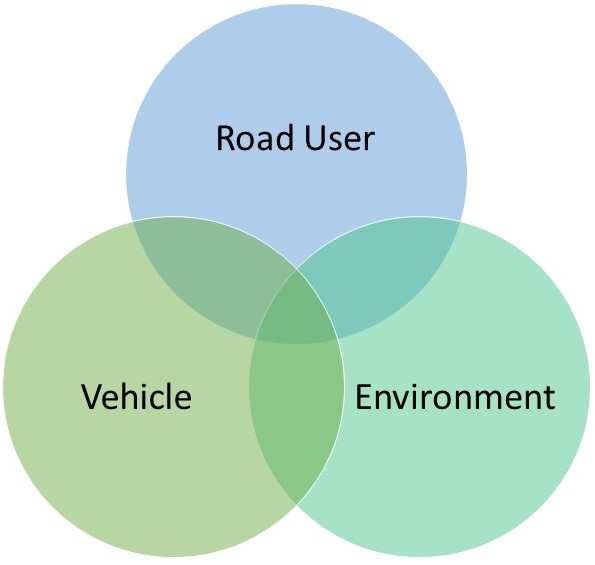
Understanding how these factors influence the transportation system, as well as each other, can help us understand the overall safety and performance of the surface transportation system.